AI Note-Taking Apps and Privacy in 2026: What the Fireflies Scandal and Windows Recall Taught Us
The short version: Two stories define AI note-taking trust in 2025–2026. First: a report that Fireflies — the "AI note-taker" — was actually two guys typing notes by hand (119-point HN thread, Nov 2025). Second: Windows Recall's privacy fight, where Microsoft's always-on screenshot history generated 100-point threads titled "sounds like a privacy nightmare." The lesson isn't "AI notes are fake and scary." It's that the value of a note app lives in where your data goes — and a growing set of genuinely local tools (Reor, Hyprnote) now offer the same value with notes that never leave your machine.
The Fireflies story: when "AI" was people
The 2025 report that Fireflies' early "AI" notetaking was actually two employees transcribing by hand got a telling reaction on HN — not shock, but the startup-world shrug:
"Isn't that what startup people always advocate — do things by hand until you've proved there's a market? Sounds like they did exactly that."
And a sharper read from another commenter: it's a snapshot of where the "AI" label lives — on the outside of the box, not the inside:
"Some LinkedIn commenters seem to see very little wrong with Fireflies' dubious early business practices. Seems to be a good example of today's zeitgeist."
Windows Recall: the always-on question
Recall is the other side of the coin: a genuinely AI-powered feature (screenshot everything, make it searchable) that sparked a permanent privacy argument. The 2024 threads — "stealing everything you've ever typed is now possible", "TotalRecall extracts your data" — settled into a pattern that keeps repeating: Microsoft promises local encryption, experts point out the attack surface, users stay uncomfortable.
The actual answer is already here: local note apps
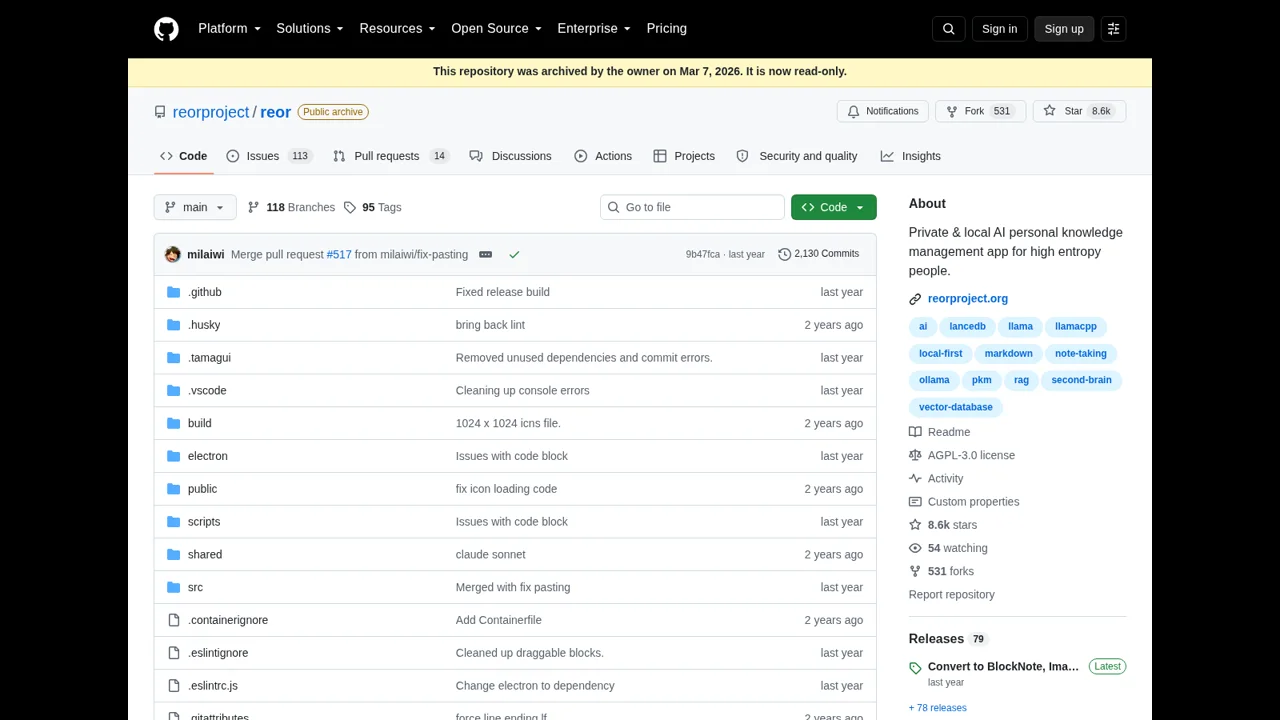
Both stories point the same direction: if the value is searchable memory, the trustworthy version runs on your hardware. That's the quiet product category that's been growing without the drama — Reor (local-first AI knowledge base, 411-point Show HN), Hyprnote (open-source meeting notetaker, YC), and the local transcription tools we covered in our meeting-notes piece. Their pitch is short: "runs models locally; notes never leave your machine."
The honest verdict
Use cloud AI notes (Notion AI, Otter, Recall-like features) if:
Your notes are work-product, not secrets — meeting summaries, public research, todo extraction. The conveniences (mobile access, sharing, cross-device search) are worth the trade, and most big vendors have clear retention controls.
Go local (Reor, Hyprnote, local transcription) if:
Your notes are private by nature — therapy-adjacent notes, salary discussions, personal memory logs, proprietary client work. On-device models in 2026 are good enough for note-taking quality, and "never leaves my machine" is a feature money can't buy.
The one line that settles it:
Ask "would I be embarrassed if this exact transcript were read by a stranger at my vendor?" If yes, local. The Fireflies story shows labels lie; the Recall story shows features creep. Local is the only answer that doesn't depend on anyone's promises.
Try a local notes app (Reor) →
Method: 408 comments read across the Fireflies-by-hand thread (Nov 2025), Windows Recall threads (2024) and Reor's Show HN (Feb 2024), categorized 2026-08-27. Quotes verbatim with links. We don't take payments from vendors — this site survives on being useful.